Regarding aviation, tourism, and geopolitics, this platform serves as a multifaceted hub where individuals can explore the latest developments and engage in thought-provoking discussions. It provides a comprehensive array of content, including current news, insightful perspectives, and thought-provoking analyses, covering every aspect, from fiction to non-fiction writing.
Unravelling the Legacy of the World’s First Residential University
Explore the rich history and enduring influence of Nalanda University, a beacon of knowledge from ancient India that shaped education, philosophy, and cultural exchange across Asia. Discover its modern revival and global significance.
Nalanda: A Timeless Beacon of Knowledge
From its founding in the 5th century CE to its modern-day revival, Nalanda stands as a testament to humanity’s enduring quest for knowledge. Born under the patronage of Gupta rulers, this “giver of knowledge” evolved into the world’s first great residential university, its amphitheatres of debate and sprawling libraries drawing seekers from across Asia. Though its physical heart was razed in the 12th century, Nalanda’s intellectual pulse never faltered—its teachings survived invasions, migrated with refugees, and found new homes in monasteries from Tibet to Korea.
A Jewel of India’s Intellectual Heritage
Nalanda’s curriculum was nothing short of revolutionary: alongside Mahayana Buddhist philosophy, students pursued logic, metaphysics, grammar, medicine, astronomy, and mathematics. This multidisciplinary ethos gave rise to luminaries such as Dinnaga, Nagarjuna, and Atisha, whose breakthroughs profoundly reshaped Asian thought for centuries. The university’s alumni carried scrolls and doctrines home, seeding institutions from Chang’an to Nara and cementing India’s spiritual and scholarly preeminence.
From Ruin to UNESCO World Heritage
Rediscovered by archaeologists in the 19th century, Nalanda’s brick stupas and stucco shrines have now been enshrined under UNESCO’s protection since May 16, 2016. Recognising both its fragility and universality, the Archaeological Survey of India and the Bihar government have drafted an integrated master plan, which includes banning construction within 300 meters, rerouting heavy vehicles, relocating hawkers, and creating perimeter parking, to safeguard the site’s integrity and its World Heritage status. Parallel initiatives by the Ministry of Culture’s restoration program harness digital archiving, classroom curricula, and public-private partnerships to rekindle Nalanda’s ancient glow.
Living Legacy: Education, Philosophy, Spiritual Thought
Nalanda’s layered libraries, known as the “Ocean of Jewels,” once housed hundreds of thousands of manuscripts, fueling debates that blurred lines between science and spirituality. Scholars meditated on the Prajñāpāramitā one moment and calculated planetary orbits the next. This synthesis underpins modern dialogues on interdisciplinarity, ethical AI, and global citizenship, proving that Nalanda’s model remains as prescient today as it was a millennium ago.
The Korean Connection: Hyecho’s Epic Pilgrimage
Nalanda’s reach extended far beyond India. In 723 CE, the Korean monk Hyecho (704–787 CE), disciple of Vajrabodhi in Tang China, embarked on a four-year sojourn to India “to acquaint himself with the language and culture of the land of the Buddha”. His travelogue, Wang Ocheonchukguk Jeon (“Memoir of the Pilgrimage to the Five Kingdoms of India”), offers vivid accounts of Magadh, Kushinagar, Varanasi, and beyond—documenting customs, climate, and Buddhist practices. Crucially, Hyecho’s chapters on Nalanda reveal not only the university’s curricular rigour but also its role as a living nexus of spiritual networks spanning East Asia.
A Contemporary Dialogue: Abhay K’s Book Talk
On June 26, 2025, the Korean Cultural Centre in New Delhi hosted a thought-provoking discussion on Nalanda: How It Changed the World by Abhay Kumar (pen name Abhay K), Deputy Director General of ICCR. Moderated by Lim Sang Woo of the Korean Embassy, the session wove together themes of inspiration behind the book, Nalanda’s golden age, and its resonance in today’s knowledge economies. Scholars and students explored the university’s impact on education, philosophy, and spiritual thought, and celebrated Hyecho’s enduring link between India and Korea. The dialogue underscored a shared commitment to preserving Nalanda’s legacy as a bridge between civilisations.
Scholarly Perspectives on Nalanda’s Global Influence
Nalanda’s legacy has long fascinated historians, archaeologists, and educationists alike. Scholars emphasise that Nalanda was not merely a university—it was a civilizational force that shaped the intellectual contours of Asia and beyond, fostering a vibrant intellectual exchange that transcended cultures and regions.
🌏 A Beacon of Transnational Knowledge Exchange, Nalanda: A Global Hub of Knowledge Exchange
🏛️ Architectural and Pedagogical Innovations
Modern educationists note that Nalanda’s campus design and teaching methodologies, such as the quadrangle-based architecture and residential learning model, influenced the layout of contemporary universities. These innovations inspired similar structures in East Asia and even in medieval Islamic madrasas. Its emphasis on dialectics, peer review, and interdisciplinary learning prefigured many modern academic norms, demonstrating its enduring influence on the field of education.
📚 Nalanda: A Model for Contemporary Revival and Global Engagement
As Alok Virendra Tiwari and Vartika Gupta observe, Nalanda’s revival is more than symbolic—it’s a strategic reclamation of India’s role as a global knowledge hub. The new Nalanda University, inaugurated with international collaboration, aims to rekindle the spirit of intercultural dialogue and intellectual liberty that once defined the ancient institution.
🧘♂️ Spiritual Diplomacy and Heritage
John Marston and David Geary, writing in Comparative Studies of South Asia, Africa and the Middle East, highlight Nalanda’s role in “heritage diplomacy.” They argue that Nalanda’s memory has become a soft power tool in India’s cultural outreach, especially in Buddhist-majority countries like Korea, Japan, and Thailand. The university’s revival is seen as a bridge between ancient wisdom and modern diplomacy.
Toward a Shared Future
Nalanda’s story is far from over. Contemporary collaborations—ranging from academic exchanges at the revived Nalanda University to joint restoration projects—signal a deepening India-Korea partnership in preserving Nalanda's heritage. Korea, whose own Buddhist foundations were partly shaped by Nalanda-trained monks, looks forward to co-sponsoring conservation efforts, the digitisation of manuscripts, and cultural festivals celebrating this timeless institution. As both nations steward this heritage site, they reaffirm Nalanda’s role as a symbol of intellectual solidarity and a beacon for world-changing ideas.
Nalanda’s journey—from its 5th-century birth to a 21st-century renaissance—reminds us that centres of learning are never truly lost. They live on in the texts we translate, the debates we carry forward, and the bridges we build between cultures. In preserving and promoting Nalanda, we safeguard not just stones and stupas, but the very spirit of inquiry that changes the world.
A Living Legacy in Korea
Korean scholars often cite Hyecho’s travelogue as a foundational text in Korea’s Buddhist heritage. His vivid descriptions of Nalanda’s scholastic environment underscore the deep-rooted spiritual and academic ties between the two nations. Today, Korean institutions continue to engage with Nalanda’s legacy through educational exchanges, translations of Buddhist texts, and cultural events, such as the recent discussion hosted by the Korean Cultural Centre in New Delhi.
These perspectives affirm that Nalanda was not just a centre of learning—it was a catalyst for global intellectual evolution. Its influence endures not only in the annals of history but also in the aspirations of modern academia and diplomacy. Let me know if you’d like to integrate these insights directly into your article draft.
Discovering Ooty: The Enchanting Queen of Hill Stations
A Journey Through the Natural Beauty and Colonial Heritage of Tamil Nadu’s Premier Hill Station
Explore the captivating charm of Ooty, nestled in the Nilgiri Hills of Tamil Nadu. Experience its stunning landscapes, rich biodiversity, and historical significance, including the remarkable Nilgiri Mountain Railway.
How to drive up to Ooty
Nestled amidst the serene Western Ghats mountains in Tamil Nadu, southern India, lies Ooty – officially known as Udhagamandalam. This captivating resort town, affectionately dubbed the "Queen of Hill Stations," offers a refreshing escape from the hustle and bustle of city life, making it a must-visit for every travel enthusiast.
Ooty possesses an unparalleled charm deeply rooted in its distinctive geographical positioning. Nestled amidst the majestic Nilgiri Hills, it holds a unique significance as the convergence point of the Eastern and Western Ghats within the South Indian peninsular region. This extraordinary junction creates a fascinating interplay of geological forces and atmospheric conditions, profoundly influencing every aspect of Ooty's natural and cultural tapestry.
The precise location of Ooty within the Nilgiris means it benefits from a confluence of climatic influences. The mighty Western Ghats, renowned for their biodiversity and heavy monsoon rains, contribute to the lush greenery and temperate climate. Simultaneously, the Eastern Ghats, while generally drier, still play a role in shaping the regional weather patterns. This geographical "meeting point" is not merely a topographical detail; it is the very essence of Ooty's character.
From this unique geographical foundation, a cascade of environmental factors—the prevailing climate, the direction and intensity of the winds, the rhythm of the monsoons, the rich composition of the earth, and the gentle caress of the sun—have meticulously sculpted the region. These elements have collectively determined the evolution of Ooty's remarkable flora and fauna. The verdant tea plantations that blanket the hillsides, the towering eucalyptus trees, the vibrant rhododendrons, and the diverse wildlife that call this place home are all direct beneficiaries of this exceptional environment.
Furthermore, this intricate relationship between geography and environment has profoundly influenced human evolution and settlement in Ooty. The indigenous communities, such as the Todas, have a deep-rooted connection to the land, their traditions and livelihoods intrinsically linked to the natural rhythms of the Nilgiris. The arrival of the British in the 19th century, drawn by the salubrious climate, further shaped the town's development, leaving behind a legacy of colonial architecture and horticultural innovation.
Today, this intricate blend of natural splendour and human history is what gives Ooty its undeniable and distinct "flavour." It is a flavour that can be seen in the mist-shrouded valleys, felt in the cool mountain air, heard in the rustling leaves, and savoured in the aroma of fresh tea. It is a destination where every vista, every breeze, and every interaction with the local culture serves as a testament to its extraordinary origins. Ooty is not just a place; it is an experience, a harmonious convergence of nature's grandeur and humanity's gentle imprint.
Ooty's allure lies in its captivating blend of natural beauty and a rich colonial past. Here are some quick facts that showcase its unique charm:
A Journey Back in Time: Unravelling the Mysteries of Ooty's Heritage Railway
Nestled amidst the Nilgiri Hills, Ooty, affectionately known as the "Queen of Hill Stations," boasts a living testament to British ingenuity and perseverance: a working steam railway line. A journey on this heritage train is more than just a scenic ride; it's an immersive experience, a palpable step back in time that begs a multitude of questions about its audacious conception and construction.
The Genesis of an Engineering Marvel:
In the mid-1860s, railways had already made a significant impact in India, with lines extending across the plains. Yet, it wasn't until the early 1900s that the British embarked on the ambitious project of conceptualising and constructing this 46-kilometre railway line to Ooty. What spurred this monumental undertaking? Was it merely the desire for a comfortable escape from the summer heat of the plains, or were there deeper strategic or economic motivations at play? The very thought of undertaking such a project in that era, long before the advent of modern technology, is truly astounding.
Navigating the Unknown: The Survey and Planning:
One of the most perplexing aspects of the Nilgiri Mountain Railway (NMR) is the question of its survey. In an age devoid of computers, GPS, or satellite imagery, how did the surveyors map out such a challenging route? The region's inaccessibility, even today, makes one wonder how they accurately assessed the terrain, anticipating the twists, turns, and gradients that would define the line. What tools and techniques did they employ to understand what lay ahead in such a rugged and unexplored landscape? Their ability to accurately gauge the path, seemingly without the benefit of comprehensive oversight, truly highlights a forgotten art of land surveying. The motivating factors behind such meticulous and perilous exploration must have been immense, driving them to conquer geographical barriers that seemed insurmountable.
Logistical Feats: Raw Materials and Construction:
The sheer logistics of building the NMR are mind-boggling. Steel for the tracks was not readily available locally. How was it transported to this remote hill station? Who bore the immense responsibility of bringing these heavy materials across vast distances and challenging terrain? The train, the engine, and the coaches themselves, along with the complex infrastructure of maintenance yards – who were the master builders behind these vital components? The construction process itself was an epic undertaking. How did they manage to lift and lay rails on steep inclines and sharp curves? The digging of 16 tunnels, some through solid rock, and the construction of over 200 bridges, many spanning deep gorges, in such a treacherous hilly environment, speaks volumes about the grit and determination of the workforce. It’s a testament to human will against the formidable forces of nature.
Human Ingenuity and Local Collaboration:
While it is understandable that support from local rulers, a vast workforce, indigenous skills, clerks, artisans, and guides would have been available, the underlying question remains: how did they evoke and integrate the necessary technological know-how? The blend of imported engineering expertise with local craftsmanship and labour must have been a delicate dance. What was the driving force for both the British and the local population to collaborate on such an ambitious project? And, crucially, beyond the immediate wages or strategic benefits, what did all parties truly gain in return for their immense efforts and sacrifices? The social and economic impact on the local communities would have been profound, transforming lives and landscapes.
By the time the answers to these profound questions struggle to materialise in your mind, your train would have gently chugged into its destination. It is in that moment of arrival that a powerful realisation dawns upon you: had those visionaries not dared to think outside the box, had they not executed their seemingly impossible vision with unwavering determination, you would have been deprived of this thrilling and historically resonant rail ride. The Nilgiri Mountain Railway stands not just as a mode of transport but as a magnificent monument to human ambition, engineering prowess, and the enduring spirit of innovation.
Ooty is not just a scenic retreat but also a treasure trove of historical landmarks that whisper tales of its colonial past. Among these, Stone House stands as a prominent reminder of the architectural grandeur prevalent in the 19th century. This venerable residence, with its distinct design and enduring presence, offers a glimpse into the lives and aesthetics of a bygone era.
Another architectural marvel that graces Ooty's landscape is the circa-1829 St. Stephen's Church. More than just a place of worship, this church is an intricate tapestry of historical significance and artistic brilliance. Its stained-glass windows, meticulously crafted and radiating a kaleidoscope of colours, tell stories within their panes, while the overall structure embodies a timeless elegance.
Beyond these tangible structures, Ooty's natural beauty also holds a significant place in its narrative. The picturesque Ooty Lake, with its serene waters reflecting the surrounding hills, has captivated not only tourists but also filmmakers. Its tranquil charm has served as a stunning backdrop for countless Indian movies, contributing to its widespread cinematic appeal and cementing its place in popular culture.
Adding to Ooty's allure is the expansive 55-acre Government Botanical Garden. Sprawling across the gentle slopes of Doddabetta Peak, this horticultural delight is a testament to nature's diversity and human cultivation. It showcases a truly diverse collection of flora, from exotic species to indigenous plants, offering a vibrant spectacle for botany enthusiasts and casual visitors alike. The garden’s carefully curated sections and lush greenery provide a peaceful escape and an educational experience, highlighting the region's rich biodiversity.
How to Reach Ooty
Reaching Ooty is an adventure in itself, with winding hilly roads offering spectacular vistas.
Via Coimbatore:
Coimbatore is the nearest major airport and railway station to Ooty. From Coimbatore, you can hire a taxi or take a bus. The journey through the Nilgiri hills is an experience in itself, with verdant tea estates and cascading waterfalls dotting the landscape.
Via Mysuru:
Alternatively, you can approach Ooty from Mysuru. Mysuru also has good rail and road connectivity. Similar to Coimbatore, a scenic drive from Mysuru will take you through some of the most beautiful stretches of the Western Ghats.
A Pioneer in Sustainable Tourism
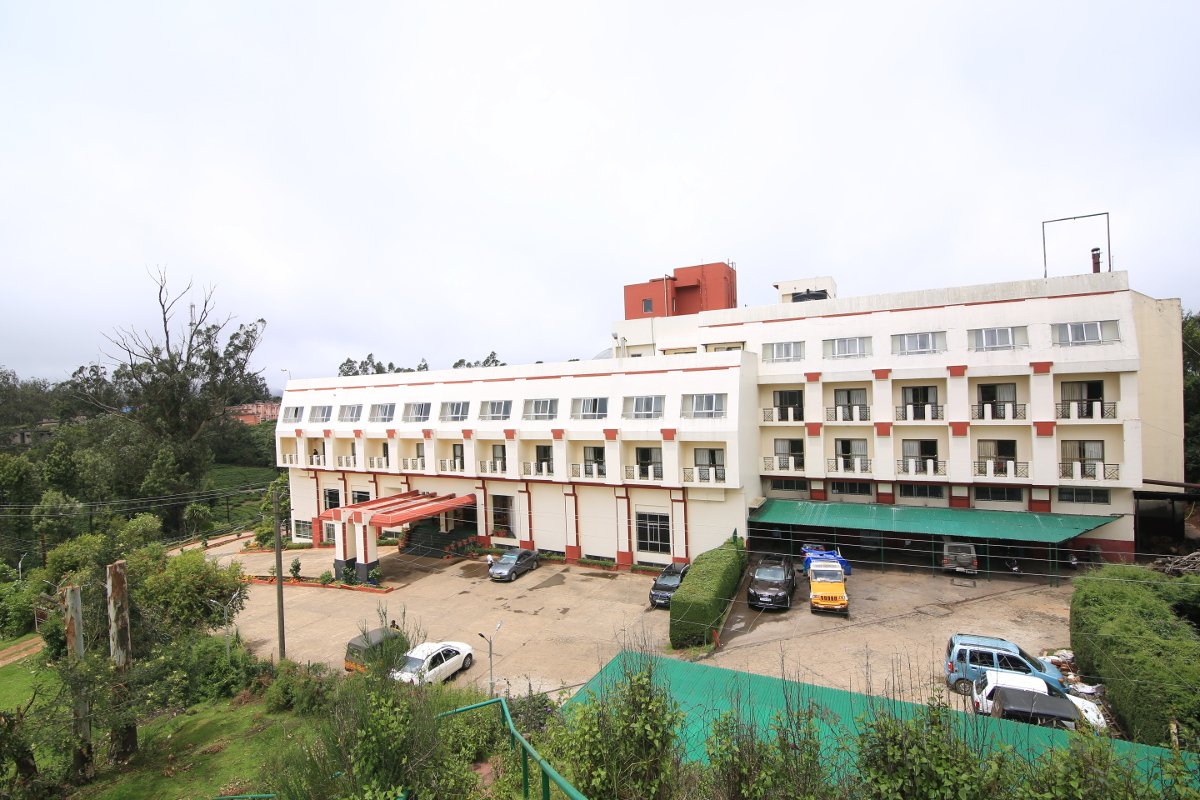
Ooty's charm extends beyond its picturesque landscapes and rich colonial heritage. It also holds a special significance for Bollywood icon and Dada Saheb Phalke Award recipient, Mithun Chakraborty. At the pinnacle of his illustrious career, Mithun Da, as he is affectionately known, embarked on an entrepreneurial venture by establishing a hotel in Ooty.
Upon arrival, guests are greeted by the awe-inspiring declaration: "Welcome to Your Kingdom. The Monarch Hotel, Ooty, Masinagudi." This grand welcome sets the tone for an extraordinary stay. The Monarch Hotel is not merely a place of luxurious comfort but also a testament to forward-thinking design, boasting its helipad for convenient access and a steadfast commitment to environmental responsibility as a designated plastic-free zone.
The hotel's location is breathtaking, nestled gracefully in the lap of Mother Nature. It casts a spell upon visitors with its pristine surroundings. The ambience is nothing short of delightful, with the outskirts enveloped in vibrant greenery. Guests can revel in the expansive lawn, a verdant expanse rarely seen, and wander through charming tea gardens. Rolling hills and serene valleys frame the property, all set amidst a consistently calm atmosphere, frequently drenched in refreshing rains, which adds to its idyllic charm.
The Monarch Hotel is a sprawling establishment that offers a variety of comfortable and cosy rooms across all classes, catering to diverse guest needs. Each space is meticulously designed with beautiful furnishings and spacious arrangements, ensuring a sense of luxurious ease and comfort.
Mithun Chakraborty's venture not only showcased his formidable entrepreneurial spirit but also established a remarkable precedent for sustainable business practices within a delicate tourist region. This initiative was launched long before the concept of sustainable tourism garnered widespread recognition, highlighting his visionary approach. His commitment underscores the crucial importance of preserving ecological balance while promoting responsible tourism, serving as an inspiration to the industry.
Mithun Chakraborty is a source of immense pride for the Bengali community. His journey, marked by considerable struggles, was far from easy. Yet, he imparted a profound lesson: where there is a will, there is a way. His unwavering hard work and sacrifices throughout his life serve as a powerful inspiration for the new generation, demonstrating the rewards of perseverance and dedication. He stands as both a great actor and a highly successful entrepreneur, embodying the spirit of determination and achievement.
Ooty truly offers a blend of historical charm, natural splendour, and a touch of cinematic magic. Whether you're seeking a tranquil retreat or an adventurous getaway, Ooty promises an unforgettable experience. Plan your journey to this enchanting hill station and immerse yourself in its timeless beauty.
How Perception and Legacy of the Iconic Film Shift Over Five Decades
The announcement of a special 50th-anniversary tribute for "Sholay" at the Il Cinema Ritrovato Festival in Bologna, Italy, marks a significant event. This re-release in 2025, under unique circumstances, invites a deeper analysis of how perceptions and legacies evolve over five decades. Explore the impact of "Sholay's" 50th-anniversary tribute at the Il Cinema Ritrovato Festival in Bologna. Delve into how the film's legacy and audience perceptions have changed in the digital age, examining themes of originality, plagiarism, and cultural significance.
A Shifting Landscape
Fifty years separate 1975, the year of 'Sholay's' original release, and 2025. Over the past half-century, human civilisation, the Earth, and the universe have undergone irrevocable changes. The audience of 2025, particularly the younger demographic (20-30 years old), is vastly different from that of 1975, when many of the film's viewers were in their 20s and 30s. Each generation carries its own cultural lens and set of expectations.
The most transformative factor in the past five decades has been the advent of the Internet. Its profound impact on social media has reshaped how information is disseminated, consumed, and scrutinised. By 2025, social media platforms will have exposed numerous instances of plagiarism in 'Sholay's' dramatics and music, significantly altering the audience's perception of the film.
The Echo of Awareness
When 'Sholay' screens in Italy after 50 years, its audience will not be entering the viewing experience with a blank slate. They will already be aware of the copycat elements within the film. The adage "one can fool someone with a trick once, but not always" rings particularly true in the age of readily accessible information. The initial impact and awe that 'Sholay' commanded in 1975, partly due to the then-unquestioned originality of its narrative and musical elements, will be diluted by this collective awareness.
'Sholay,' released in 1975, transcended mere cinematic achievement to become a cultural phenomenon, forever etching its mark on the careers of its lead actors. For luminaries such as Amitabh Bachchan, Dharmendra, Hema Malini, Sachin Pilgaonkar, and Jaya Bachchan, the film wasn't just another credit; it became an indelible, foundational part of their professional identity. Their résumés, in essence, perpetually carried the weight and prestige of 'Sholay' work experience, a testament to the film's monumental success and its unparalleled influence on their subsequent trajectories. Decades later, the immense shadow of 'Sholay' continues to shape public perception of these actors, its influence seemingly unshakable.
Tragically, the passage of time has claimed many talents from the 'Sholay' ensemble. While some continued their careers, some of their co-stars, including the iconic Sanjeev Kumar, the menacing Amjad Khan, and the venerable A.K. Hangal, have since passed away, leaving behind a legacy intertwined with the film's enduring magic.
Beyond the silver screen, 'Sholay' also held interesting personal and political footnotes for its cast. Hema Malini, for instance, famously did not marry Sanjeev Kumar, despite their on-screen romantic entanglement in the earlier film Seeta Aur Geeta. They did not share a single scene together in 'Sholay.' Instead, she later married an already married man, Dharmendra, creating one of Bollywood's most enduring and fascinating real-life bi-gamic partnerships.
In a fascinating twist of fate, both Jaya Bachchan and Hema Malini, who played pivotal roles in the film, now find themselves in the hallowed halls of the Indian Parliament, albeit representing opposing political ideologies, underscoring the diverse paths their lives have taken since their unforgettable roles in 'Sholay.'
An Unexpected Reckoning
However, as life completes a 50-year circle, the same positive and career-defining effect of 'Sholay' from 1975 may prove elusive for them in 2025. Instead, they may face an opposite reaction. The re-release may bring them to a position where they have to answer several questions pointing to the numerous instances of plagiarism. For decades, its producers have claimed ‘’inspiration’’ from cult western movies like Once Upon a Time in the West, The Wild Bunch, Mackenna’s Gold, The Good, The Bad, and The Ugly, or The Magnificent Seven. This narrative of "inspiration" was accepted mainly, if not aggressively challenged, in an era with limited access to global cinema and a nascent understanding of intellectual property rights. The charm and novelty of 'Sholay' on the Indian cinematic landscape often overshadowed any lingering doubts about its originality.
But, the discerning viewer and critic in 2025 are quick to see the difference between ‘inspire’ and ‘copy’. This shift in public perception, fueled by increased global exposure and readily available information, could lead to a significant degree of embarrassment for the filmmakers, a consequence entirely unforeseen in 1975. The digital age, with its rapid dissemination of information and heightened awareness regarding intellectual property, ensures that past claims of 'inspiration' are now scrutinised with a much finer comb, potentially exposing creative liberties that were once overlooked or even celebrated.
For many Indians, the immediate reaction to a successful song or movie emerging from their own country is often a sceptical, "Is it copied?" This knee-jerk reaction stems from a deeply ingrained perception —a subtle yet pervasive doubt regarding India's capacity to produce genuinely original and high-quality creative works. There's an underlying societal conditioning that has led people to be unaccustomed to—and therefore suspicious of—the idea of original excellence originating domestically. This sentiment reflects a historical context where creative industries were often perceived as derivative, leading to an automatic default to questioning authenticity whenever something truly exceptional emerges.
What was once seen as clever homage or cultural appropriation might now be viewed as blatant copyright infringement, especially given the side-by-side comparisons that are now effortlessly made available through online platforms. The re-release of 'Sholay' in this new, hyper-aware environment could thus inadvertently spark a fresh, critical examination of its creative origins, potentially tarnishing its celebrated legacy and forcing its creators to confront uncomfortable truths about their artistic choices.
For Amitabh Bachchan, 'Sholay' remains permanently etched in his mind. The shooting experience was unforgettable, and he had no idea at the time that it would become a watershed moment for Indian cinema. He likely hoped the film would continue to capture the imagination of new audiences worldwide.
The enduring appeal of Sholay is often attributed to its memorable characters and their dynamic interactions. Among the most iconic pairings is that of Veeru, portrayed by the effervescent Dharmendra, and Jai, played by the intensely stoic Amitabh Bachchan. Their on-screen chemistry, characterised by Veeru's relentless chatter and Jai's quiet, watchful demeanour, draws immediate parallels to the legendary partnership of Butch Cassidy and the Sundance Kid, famously brought to life by Robert Redford and Paul Newman in the 1969 American Western film.
In Butch Cassidy and the Sundance Kid, the humorous, often exasperated exchanges between the charismatic and talkative Butch (Newman) and the more reserved, quick-drawing Sundance (Redford) formed the emotional core of the film. Similarly, the narrative of Sholay thrives on the contrasting personalities of Veeru and Jai. Veeru, with his boisterous humour and often impulsive decisions, acts as the foil to Jai's understated wisdom and calm pragmatism. Their dialogue, filled with both comedic jabs and moments of genuine camaraderie, elevates the film beyond a mere action spectacle into a character-driven drama.
This deliberate echo of the Redford-Newman dynamic was not merely a coincidence but a conscious choice by the filmmakers of Sholay to infuse their narrative with a universally appealing buddy-cop (or rather, buddy-outlaw) formula. The archetype of the charming, talkative rogue paired with the quiet, brooding partner has been a staple of storytelling across cultures, and Sholay's adaptation of this formula, imbued with distinctly Indian sensibilities, resonated deeply with audiences. The success of both films, in large part, rested on the audience's investment in these relationships, demonstrating that the enduring power of a story often lies in the complex yet relatable bonds between its central figures.
However, with the current climate of widespread awareness regarding its uncredited influences, the film may not achieve that same magical resonance for the younger, globally connected generation as he might have wished. The 50th-anniversary screening, while a tribute to its historical significance, also serves as a stark reminder of how scrutiny and legacy are redefined in an era of unprecedented access to information.
The foundational claim that Bollywood's very existence is inextricably linked to Hollywood's influence is a compelling one, suggesting a relationship that extends beyond mere inspiration to a more fundamental dependency. This isn't to diminish Bollywood's unique identity, vibrant storytelling, and global reach, but rather to acknowledge the significant ways in which Hollywood, as an established global film industry, provided early models, technological innovations, and even narrative frameworks that shaped the nascent Indian film industry.
Consider the early days of Indian cinema. While indigenous theatrical traditions and mythological narratives provided a rich tapestry for storytelling, the advent of cinema as a medium was inherently a Western import. The Lumière brothers' screenings in Bombay in 1896 were the initial spark, directly introducing the technology and concept of motion pictures to the world. As Indian filmmakers began to experiment, they naturally looked towards the burgeoning film industries in the West, particularly Hollywood, for guidance on production techniques, studio systems, and genre conventions.
Hollywood's studio system, with its emphasis on mass production, star power, and genre specialisation (musicals, romances, dramas, action films), offered a blueprint that Bollywood, in its formative years, consciously or unconsciously adapted. The concept of a "star system" in Indian cinema, where actors attain almost demigod status, can be seen as mirroring the cult of personality cultivated by Hollywood. Similarly, the development of sophisticated narratives, editing techniques, and cinematic grammar often found their origins in Hollywood's evolving artistry.
Furthermore, economic and technological factors played a crucial role. Hollywood, with its immense financial resources and technological advancements, often pioneered new filmmaking equipment, sound recording techniques, and colour processes. These innovations, once proven successful, would eventually find their way to India, either through direct import or through the reverse-engineering of ideas. Without the continuous stream of technological progress originating from Hollywood, Bollywood's ability to evolve and keep pace with global cinematic standards might have been severely hampered.
Beyond the technical and structural, there's the less tangible, but equally significant, influence of cinematic language and tropes. While Bollywood developed its distinct song-and-dance sequences and melodramatic flair, it also assimilated universal storytelling archetypes and narrative structures popularised by Hollywood. The hero's journey, the damsel in distress, the villain's comeuppance – these are themes that resonate across cultures, and Hollywood's masterful articulation of them undoubtedly provided a framework for Indian storytellers to build upon, albeit with their own unique cultural specificities.
Hollywood served as a global cinematic university, offering lessons in everything from scriptwriting and cinematography to marketing and distribution. While Bollywood has since matured into a formidable industry with its own distinctive voice and global following, the historical lineage and foundational influence of Hollywood remain undeniable. It's a testament to Bollywood's adaptability and creativity that it was able to absorb these influences and transform them into something uniquely its own, rather than merely becoming a carbon copy. Therefore, the assertion that Bollywood's existence is deeply intertwined with Hollywood's pioneering efforts is not an exaggeration, but rather a recognition of a complex and historically rich relationship.


 Modern educationists note that Nalanda’s campus design and teaching methodologies, such as the quadrangle-based architecture and residential learning model, influenced the layout of contemporary universities. These innovations inspired similar structures in East Asia and even in medieval Islamic madrasas. Its emphasis on dialectics, peer review, and interdisciplinary learning prefigured many modern academic norms, demonstrating its enduring influence on the field of education.